Books Read in August 2015
This month, I slogged through a 700 page testimonial to pain, and supplemented that with several children’s chapter books – and one of my favourite Canadian authors.
I’ve included the two mysteries I read at the end of this post.
1. GOOD TO A FAULT by Marina Endicott (Fiction, Literary, Canadian) 
In a moment of distraction, spinster Clara Purdy crashes her car into one which contains a homeless family – in fact, the car was their home. When mother Lorraine is taken to hospital, she is diagnosed with late-stage cancer. Feeling somewhat responsible for their current predicament, Clara takes the rest of the family (three children, including a ten-month-old & their paternal grandmother.)
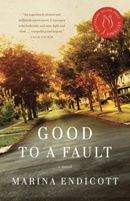
Clara is a good person—good to a fault, it seems. Clara invites the whole family to live with her while Lorraine has medical treatment. The husband/father takes off soon after with no notice, leaving Clara with granny & the kids. There are emotional entanglements and other consequences of Clara’s practical goodness.
From Amazon: “What, exactly, does it mean to be good? When is sacrifice merely selfishness? What do we owe in this life and what do we deserve?”
I find Marina Endicott’s novels to be consistently enjoyable. Thank you to Trish at Desktop Retreat who reminded that this remained unread. Recommended.
4½ stars
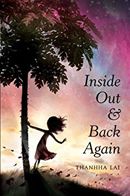
2. INSIDE OUT AND BACK AGAIN by Thanhha Lai (Fiction, Children’s Chapter, Vietnamese/American)
A young girl tells the story of her family’s escape from Saigon when it fell, and their experience in a refugee camp in Florida, sponsored by someone in Alabama, where the family eventually end up.
It’s told entirely in free verse. It’s very beautiful and, despite my categorizing it as a children’s book, I recommend it for readers of all ages.
No one would believe me
but at times
I would choose
wartime in Saigon
Over
peacetime in Alabama.
A shout out and thank you to Rebecca of Rebecca Reads who convinced me to try this.
4½ stars
3. THE HIGHER POWER OF LUCKY by Susan Patron (Fiction, Children’s Chapter) 
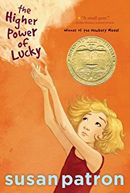 Ten-year-old Lucky Trimble lives in Hard Pan, California, pop. 43, at the edge of the desert. Her mom recently died as the result of going outside after a storm and touching a downed electrical wire. She’s now living with her biological father’s first wife, Birgitte, who has come from France to look after Lucky. And Lucky is afraid Birgitte will return to France, leaving her in an orphanage.
Lucky hangs around the town hall where all the “anonymous” meetings are held (Alcoholics, Gamblers, Overeaters) and she overhears them all talking about finding their ‘higher power’. Lucky thinks if she can find her higher power, Birgitte will stay in Hard Pan with Lucky.
4. ON POPPY’S BEACH by Susan Pynn Taylor illustrated by David Sturge (Fiction, Picture Book, Atlantic Canadian)
Amazon says:
“Come spend a sweet summer’s day exploring and enjoying the curiosities and beauties of a rural Newfoundland beach, as seen through the eyes of a little child. Filled with beautiful illustrations and lyrical verse, here is a warm and happy adventure that is both uniquely Newfoundland – as well as universal in its celebration of nature, nostalgia and joyful childhood innocence.”
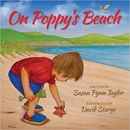
Illustrated with lovely, brightly colored pictures.
On Poppy’s beach seashells I find.
My bucket’s filled with every kind.
I keep the ones I like the best
to hide home in my treasure chest.
5. NOOKS AND CRANNIES by Jessica Lawson (Fiction, Children’s Chapter)
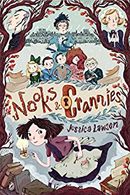 Rich Countess Camilla DeMoss issues invitations to her country estate to six children (including Tabitha Crum) from various circumstances, some with a Roald Dahl bent. She tells them that they are all adopted and one of them is her long-lost grandchild, heir to her large fortune.
When the children start disappearing, Tabitha becomes determined to solve the mystery.
Get this into the hands of your mystery-loving ten-to-twelve-year-olds.
4 stars
6. A LITTLE LIFE by Hanya Yanagihara (Fiction, Literary) 
Ostensibly about a group of four college friends, this is really the story of one: Jude who is loved by everyone but struggles constantly with physical and emotional pain.
I know I’m one of the minority here, but I really didn’t like this book. At 720 pages, it’s about 300 pages too long. I mean, how many times do we have to go up and down emotionally with Jude? How many people can love him more than anyone else they’ve met? How much more money can the four make?
 Spoiler alert: The writing is beautiful and for the first hundred pages, I really enjoyed it. But by the time Jude finally committed suicide, I was done.
But, as I said, the writing is beautiful. This excerpt is spoken by Malcom after Jude’s death:
All those answers I had wanted about who and why he was, and now those answers only torment. That he died so alone is more than I can think of; that he died thinking he owed us an apology is worse; that he died still stubbornly believing everything he was taught about himself—after you, after me, after all of us who loved him—makes me think that my life has been a failure after all, that I have failed at the one thing that counted.
Beautifully written, but stultifying long.
3½ stars
* * * * *
MYSTERIES
Vintage short stories and a contemporary thriller comprised my August mystery reading.
1. DIAGNOSIS IMPOSSIBLE: The Problems of Dr. Sam Hawthorne by Edward D. Hoch (Fiction, Mystery, Short Stories)
Anyone familiar with vintage mysteries such as those in Ellery Queen or Alfred Hitchcock Magazines has heard the name Edward D. Hoch – and, in fact, many think he is the finest author in this genre. He has received the Mystery Writers of America’s highest honour, the Grand Master Award, and he has been recognized for Lifetime Achievement by the Private Eye Writers of America and the Bouchercon. According to FantasticFiction.com, Ed Hoch is the only author who specializes in the mystery short story to receive such recognition.
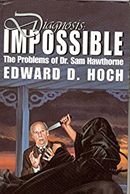 Dr. Sam is a country doctor in what I recall seemed the early part of the twentieth century. There were still horses and carriages, but Dr. Sam did have a nice roadster. Aside from making house calls and doctoring the county, Dr. Sam is an amateur sleuth.
Many of these stories first appeared in one of those fine mystery magazines mentioned above. If you’re a fan of those, you’ll love this. I did.
Thank you to the Puzzle Doctor at In Search of the Classic Mystery Novel for letting me know about this.
4 stars
2. THE KIND WORTH KILLING by Peter Swanson (Fiction, Psychological Suspense)
I don’t read much psychological suspense, but this got so many rave reviews on the book blogosphere that I gave it whirl.
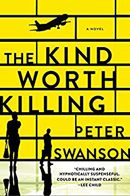 Much as in Strangers on a Train, businessman Ted and the artist Lily meet in an airport lounge and trade tales of their spouses of which both are tired. They enter into discussions, and they . . . . well, you know that’s the thing: although I enjoyed this well enough at the time, even though it was more commercial than what I usually read, I can’t remember anything about it beyond that. Forgettable, then.
A shout out to Greg at New Dork Review of Books and Kathy at Bermuda Onion who were the first to alert me to this book.
I’ll stick with the original rating, to be fair.
3½ stars
How do you handle being the odd man out when a book you don’t like is getting rave reviews from everyone else?

P.S. The links are affiliate links so I will receive a small percentage of any purchase you make after clicking through from this blog.


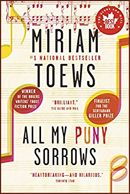 Elfrieda (Elf) is a world-renowned pianist, beautiful, wealthy, in a happy marriage – and she wants to die. Her younger sister Yolandi (Yoli) who tells this story is broke, divorced and struggling as a single mother, and she desperately wants to save her sister from committing suicide, while she tries to keep her own life together.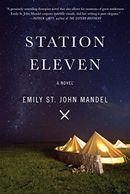
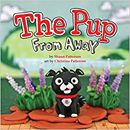 Look closely at the picture on the cover of the book – and then imagine the entire book illustrated by these charming clay sculptures augmented by other materials. They fairly leap off the page.
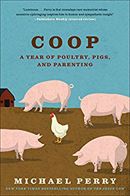 Coop was the only non-Canadian book I read this month, but it arrived at the library for me so it went on the reading pile. I had ordered it because I’m always on the lookout for books about country living by people who have an empathy for city sensibilities, and I have a couple of other books by Michael Perry that have intrigued me in the past on my own bookshelves (unread yet).
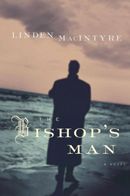 The Bishop’s Man won the prestigious Giller Prize in 2009. In the story, Duncan MacAskill, a Catholic priest who has a genius touch for ‘resolving’ church scandals quickly and quietly is now assigned to an insignificant parish in Cape Breton, Nova Scotia. The effects of the cover-ups which MacAskill orchestrated are starting to haunt him, causing overdrinking and the decision to give his past journals to a reporter.
 Twelve-year-old Jacob Mosher, son of an alcoholic mother and a recently deceased father, is sent from big city Ontario to rural Nova Scotia to spend the summer with aging grand-parents he just learned he had.
 Does Your Mother Know is the first in a series featuring Christine Morris, a forensic profiler with the Ontario Provincial Police (OPP) in Toronto, Canada. In this debut, Christine is on leave in Scotland, investigating the disappearance of her estranged mother, who has been involved in a “vehicular homicide”.
 It’s always been more about Flavia and her quirky family than the mysteries, but this instalment disturbingly convolutes that family story. It seemed to be as if the plot was being made up as the author went along, rather than being planned and knowing where it’s going in the future.
 Part of what I love about this series is the atmosphere – the life and ways of modern French villages, being bought out by wealthy foreigners (chiefly British), but valuing their heritage, including their cooking.
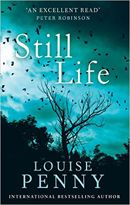 This is the debut novel of the ultra-popular series featuring Chief Inspector Armand Gamache of the Sûreté du Québec, assigned to a murder in the rural village of Three Pines, south of Montreal. In it, we are introduced to those who, I’ve gathered, are continuing characters in the series.
 I think I found this free on Kindle and downloaded it, thinking it was the first in the series. It’s actually second, and I think I would have gotten just that much more out of it if I’d read the first.
 As drinking water runs out and people start to die, Hector finds a number on Cesar’s phone for Annie Mac and leaves messages for her on her voice mail, hoping that they will transmit when there “are bars”.
  This cool and still story of the fictional prairie hamlet of Juliet, Saskatchewan for a 24-hour period one August won the
 It seems that armed conflicts are happening in every corner of the globe and, sadly, they affect civilians by the millions. This book focuses on a specific segment of that civilian population: the children, who may have been injured or maimed, left without parents, whose homes have been destroyed, whose schooling has been interrupted, and who go to sleep scared and hungry.
 This second installment in the Jack Reacher series was a great disappointment.
 William Styron is one of those mid-twentieth century authors of literary fiction whom I’ve always meant to read. Tidewater Morning is a novella that I happened to have on Kindle which I had taken with on vacation.
 A project in 2060 Oxford sends several students to various places in the Second World War. They do know a lot of history, but who can know every detail? In London during the Blitz, they face air raids, blackouts, and missed assignations with their controls.
  From Amazon: “Small-town gossip never much bothered Olivia Westerly. As a single career woman, she’s weathered her share. It’s easy to ignore the raised eyebrows over her late-in-life marriage to Charlie Doyle. But after he drops dead on their honeymoon, the whispers are salt on her raw grief. Especially when an orphaned, eleven-year-old-boy shows up on her doorstep, looking for the grandfather he never met.”
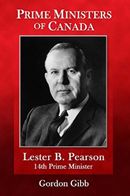 When I was first becoming aware of government in the 1960s, Lester Pearson (after whom Toronto’s international airport is named) was Prime Minister of Canada.
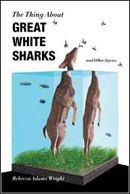 Many of these are set in the near-future or in dystopian worlds. In the title story, after “the fever” has turned all flora & fauna into human-attackers, Jennifer is conscripted by the government for ‘fear’ testing. Put into a room or a pool with such animals as pythons and sharks, her reactions are monitored for use in the military.
 What to make of the woman who inspired Something, Wonderful Tonight, and Layla by rock greats George Harrison and Eric Clapton?

 This is the fourth in the Hermes Diaktoros series which opened with such a bang for me in January 2015.
  Although she is the author of two other mystery series, Jennings is probably best known as the author of this series featuring Detective Murdoch, set in nineteenth-century Toronto, Ontario. The books are the basis for the popular television series
 Huggan explores the concept of ‘belonging” not only in relation to fitting in and becoming a part of the French community, but also in relation to no longer ‘belonging’ in Canada when they visit.
 Roost was chosen as the One Book Nova Scotia selection for 2015.
 Set in Mao’s China in 1957, the title of this book refers to the program—“Let a hundred flowers bloom; let a hundred schools of thought contend”—that saw intellectuals and artists feel free to express dissident ideas, only to find that it led to arrest and ‘re-education’ in labour camps, or even death.
 Each story in this collection is rich – in language, and in relationships. For the most part, these are everyday situations: a family returning to the family cottage for their annual vacation, an elderly woman faced with having to enter a nursing home, a young girl grieving her mother who has died of breast cancer, but in each Fish plumbs the depth of the complex human heart.