Books Read in November 2012
 I’m into the home stretch for my 2012 Reading Challenges, faced with a thick stack of unread books for the month of December. If we get a couple of storm days this month, I may just make it!
November’s entries include a couple of tomes I would never have otherwise read but for Challenges, and I’m happy for the broadening of my reading horizons. There are several prize-winners in this month’s list as well. Enjoy!
The Sisters Brothers

I had somehow expected this picaresque novel which won Canada’s Governor-General’s Award and was short-listed for the Booker prize in 2011 to be more light-hearted than it is.
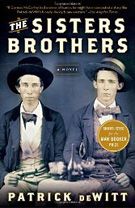 The tale is narrated by Eli Sisters who, along with his brother Charlie, have been hired by the Commodore to kill Hermann Warm, a gold miner in 1851 California. Eli, a surprisingly warm and likable outlaw, is struggling with the ethical issues in his life and is thinking about packing in the life of hired killer.
The book deserves more than this brief summary. Michael Christie writing for the National Post said “The overall effect is fresh, hilariously anti-heroic, often genuinely chilling, and relentlessly compelling (…) A mighty fine read.” I can’t say it better.
Read this if: you appreciate black comedy; you want a fresh take on a western novel; or you just want to see what all the fuss was about – it’s worth the short time it will take you to read this. 4½ stars
* * * * *
The Beggar’s Garden
by Michael Christie (Fiction, Short Stories, Canadian) 
This collection of short stories is set in the “riotous and hellish, but strangely contained, slum of [Vancouver’s] Downtown Eastside”. This area which includes part of Hastings Street is infamous across Canada. As one of Christie’s characters observes: “It was as if the country had been tipped up at one end and all the sorry b!@#$%$s had slid west, stopping only when they reached the sea, perhaps because the sea didn’t want them either.”
Told from various points of view – the grandfather who leaves food and clothing in dumpsters that he knows his drug-addicted grandson dives, an addict who has just spent his entire welfare cheque on a giant dope trip, a woman who runs a second-hand store, and so on – the stories all intrigued me. Short story collections always seem to have a few weaker pieces. I didn’t think this had any.
Read this if: you’re interested in knowing just how close any one of us is to being on the street; or you’d like some insight into the people in a Canadian city’s slum. 4 stars

* * * * *
Holes 
Holes is the winner of multiple awards including the 1999 Newbery Medal for the most distinguished contribution to American literature for children. It’s also the book upon which the movie of the same name is based. 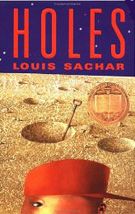
Stanley Yelnats has been unjustly sent to a boys’ detention centre (in the desert), Camp Green Lake, where the boys build character by spending all day, every day, digging holes exactly five feet wide and five feet deep. Poor Stanley: his family doesn’t have a lot of money and he thought this might be the first time he got to a summer-type camp. Instead, he ends up playing Jacob Two-Two to the Boss’ Hooded Fang.
There’s a mystery told in flashback so the reader is always ahead of Stanley, but just, and there’s piecing together for the reader to do too. It’s actually quite a bit of fun. I’m finding some really good books by reading Newbery winners.
Read this if: you saw the movie Holes (c’mon, you have to read the book); you were a fan of Jacob Two-Two
* * * * *
The Birth House

This 2007 debut novel by Canadian author Ami McKay (well, Canada claims her since she lives here now) is set in Nova Scotia on the shore of the Bay of Fundy, the bulk of the story taking place in the years 1916-1919.
The protagonist, Dora Rare, is befriended and mentored by the community’s midwife/herbalist. Over the course of her life, Dora’s home becomes the birth house – or the place where the women of the community go to have their babies, rather than making the sometimes dangerous trip into the nearest town where ‘modern’ male medicine suits their needs rather less. 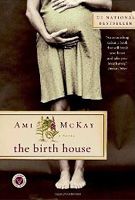
The Birth House has been described as “an unforgettable tale of the struggles women have faced to control their own bodies and keep the best parts of tradition alive in the world of modern medicine.” While I’m all for that, the rabid superstition and novena cures of the training midwife detracted from the strength of the women’s positions, in my opinion.
Read this if: women’s issues are important to you and you want to know something of their evolution in rural North America; or you want an authentic picture of WWI era Nova Scotia (the description of the aftermath of the Halifax Explosion is particularly moving). 3½ stars
* * * * *
Men at Arms
Winner of the 1952 James Tait Black Memorial Prize, Britain’s oldest literary award, Men At Arms is the first part of Waugh’s The Sword of Honour Trilogy 
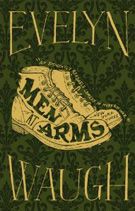 It follows Guy Crouchback, the nearly-forty-year-old son of an English aristocratic family who manages to get accepted to officers training in the early part of 1940, and is eventually posted to Dakar in Senegal West Africa. While there, he inadvertently poisons one of his fellow officers and is sent home in disgrace.
That’s about all the plot there is. But the book was interesting for its look at British officers’ instruction in WWII, in contrast with other reading I’ve done which focuses on the training of rank and file soldiers, and for the insight into the chaos that was the British Army in the early part of the war: “The brigade resumed its old duty of standing by for orders.” Waugh’s wickedly dry sense of humour is brilliant.
Read this if: you’re a fan of Downton Abbey
* * * * *
Three Junes
If this hadn’t won the National Book Award in 2002, I’d tell you it was a women’s novel, and a mediocre one at that. I might still tell you that.
Three summers (1989, 1995, & 1999) in the life of a Scottish family, in Dumfries & in NYC. There are some expressive observations about death (“Everyone dies alone, no matter how many people there are in the room”); and life (“Time plays like an accordion in the way it can stretch out and compress itself in a thousand melodic ways”) but overall, I wasn’t satisfied with any of the character development, and there was little plot to speak of.
Read this if: you like cause-and-effect parent-and-children stories; or you like things tied up in a neat bundle. 3½ stars
* * * * *
Memoirs
Published in 1993, this set of former Canadian Prime Minister Trudeau’s memoirs briefly covers the first 49 years of his life including childhood, early world travels and entry into politics, and then concentrates on his time as Prime Minister from 1968-1984. 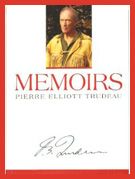
Anyone who is familiar with Trudeau’s time in office knows that humility was never his strong suit. But the man could lead – and here we gain insight into how he did that and how strong self-confidence (alright – arrogance) helped him to do it. You’ll want to have at least a basic understanding of the Canadian parliamentary system before reading this. A passing acquaintance with the political issues of the day such as Quebec’s push for sovereignty-association, and repatriation of the constitution would enrich your read but is not necessary.
Don’t expect in-depth political analysis: although this book weighs in at over two pounds when a similar sized volume might normally be a full half-pound lighter, the font is large, the text spaced, and there are a number of photographs throughout. And don’t expect any revelations about his personal life either. When in office, Trudeau scrupulously kept his family separate and apart from his political life. His memoirs’ contents mirror that.
Read this if: you loved him, or you hated him (Trudeau seemed to seldom leave anyone on the sidelines with regard to their feelings for him); you want a refresher on Canadian political history of the time (albeit from one point of view); or you want an introduction to one of Canada’s most widely-known and best-remembered leaders. 3½ stars
* * * * *
Death At The President’s Lodging

This is the first in Innes’ Inspector Appleby series and was published in 1936. I expected perhaps something akin to Agatha Christie but Innes is very different. Or perhaps I only think so because this particular mystery was set in an Oxford/Cambridge-based university and I have no understanding whatever of dons/underdons/proctors and so on and found it difficult to wade through all of those issues (which are pertinent to the crime). The mystery was solid but although I may read more Innes, given the number of untried mystery series out there, I doubt that it will be soon.
Read this if: you like a really ‘academic’ mystery, British, straight-up; or, like I did, you need an “I” author for an A-Z Reading Challenge. 3 stars
* * * * *
The Stranger

The preface to my edition (Everyman’s Library) states: Albert Camus’ spare, laconic masterpiece about a Frenchman who murders an Arab in Algeria is famous for having diagnosed with a clarity almost scientific, that condition of reckless alienation and spiritual exhaustion which characterizes so much of twentieth-century life. Possessing both the force of a parable and the sentence-by-sentence excitement of a perfectly executed thriller, The Stranger is the work of one of the most engaged and intellectually alert of our century’s writers.” (…)(T)he earliest readers of The Stranger recognized the bleak, claustrophobic world portrayed in Camus’ novel. The bleakness, the banality and the sense of imprisonment were interpreted as an acute and accurate evocation of the feeling of the period. [WWII Occupied France].
It’s considered a modern classic and I’m glad that I’ve read it, although reading it was not in the least enjoyable.
Read this if: you enjoy existentialist thinking (this is considered by some – although not the author – to be an example of that movement in philosophy; you want to better understand the mental attitude of the general populace of occupied France faced with the daily drudgery of earning a living, finding food and fuel and living an uneasy coexistence with the Germans; or you need a short translated piece of fiction for a Reading Challenge. 2½ stars
BOOK DEPOSITORY has free world-wide delivery:

OR: Pick up some bargains at

OR
Amazon links for Canadian readers:
The Sisters Brothers
The Beggar’s Garden
Holes
Jacob Two-Two Meets the Hooded Fang
The Birth House
Men at Arms
Sword Of Honour Trilogy
Three Junes
Trudeau’s Memoirs
Death At The President’s Lodging
The Stranger


Kindle editions:
The Sisters Brothers
Holes
The Birth House
Men At Arms
Three Junes
Death at the President’s Lodging
The Stranger




 by Wayne Johnston (Literary Fiction, Canadian, Atlantic Canadian)
 by Richard Llewellyn (Literary Fiction, Historical)
  by Leo McKay Jr. (Literary Fiction, Canadian, Atlantic Canadian)
  Renamed Eastlake & set a few years earlier than actual, the mine and the explosion are major components of the book, forming the background of the plot. But the story is about people: father Ennis, desperately wanting to connect with his sons, and messing up every interaction with them. Elder son Arvel is having marriage problems; younger son Ziv despairs of having a future in his home, Nova Scotia.
 by Salman Rushdie (Literary Fiction, Historical, Magical Realism)
  by Pierre and Janet Berton (Non-fiction, Food & Cooking)
  This slim volume is more a history of eating in Canada from the pioneer settlers until 1966 when this book was published. I found most interesting the comments on attitudes toward dining in the 1920s through the 1950s and the ‘modern’ take of forty years ago. Tastes and trends in food are always changing, especially in ‘immigrant countries’ such as Canada and the USA, and as a time capsule of the late 1960s, early 1970s, this is superb because it contains not only recipes but commentary. The recipes (which are not the bulk of the book) include such “old-time Canadian standbys” as butter tarts, lemon snow and apple crisp. Yum.
 by Joyce Carol Oates (Fiction, Short Stories, Suspense)
  that did not prepare me in any way for this collection of short stories, which are billed “mystery and suspense”. The suspense I get; I’m not so sure about mystery. All of the stories have an element of the criminal or the macabre.
 by Spencer Quinn (Fiction, Mystery)
  by Claire Vanderpoole (Fiction, YA, Historical)
  Vanderpoole kept me on the edge of my chair waiting for the next 1918 installment in the alternating story. I had as much fun as Abilene matching up the people then with those in ‘current-day’ 1936.
 by Jean Craighead George (Fiction, YA)
  and want to try a fictional account of wolf life. 3 stars
 by Lucy Maud Montgomery (Fiction, YA, Romance)
 by Jasper Fforde (Fiction, Mystery, Fantasy) DNF


 .99¢
.99¢ by Louisa May Alcott (Fiction, Classics, YA)
 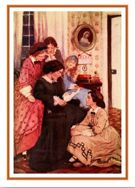 This is really a Young Adult novel and I’m sure that each young (or older!) reader identifies with one of the sisters: the eldest, Meg who is maturing into a young women preparing for marriage; Jo, the impetuous tomboy & alter ego of the author; home-loving and painfully shy Beth; and the creative & somewhat spoiled baby, Amy; and events in the book involve all sisters in turn. Each chapter of Little Women contains a gentle moral, espousing a value such as honesty, industry or thriftiness with time and money.
 by Geraldine Brooks which follows the activities of the girls’ father, Mr. March during his enlistment. Note: March is not a
  by Truman Capote (Non-fiction, Crime)
 by Mordecai Richler (Literary Fiction, Canadian)
  But Duddy wants to “make” it so, in his teens and twenties, following his grandfather’s advice that “a man without land is nothing”, he wheedles and hustles his way through scheme after scheme to purchase land for development. Along the way, he finds out just what morals he will compromise for his dream.
 , it has convinced me that I must read his entire canon.
 by Mary Lawson (Literary Fiction, Canadian)
  by Thornton Wilder (Literary Fiction, Classic)
  The setting of this book is Lima Peru 250 years ago. One fateful day a bridge made of willows which for ages has spanned a deep gorge near the city, breaks, and five people plunge to their deaths. Brother Juniper, a monk, witnesses the accident and determines to trace the life stories of the five to prove his belief that each of them in some way deserved this fate, and that such a catastrophe was God’s will.
 by Penelope Niven was released October 30th, 2012.
 by John Steinbeck (Non-fiction, Travel)
  At the beginning of the trip (and the book), the author gives the reader lots of personal details both about his adventure, the places he sees, and the people he meets. But as the book progresses, the story is recounted in greater generalities, and he drives hundreds of miles without talking to anyone.
 by Stephen King (Popular Fiction, Time-Travel, Science-Fiction)
  which I had not realized until I had nearly finished it, is a classic horror novel. That put me off King, and I haven’t read another of his books in over 40 years.
 As everyone must know by now, the story concerns a time ‘hole’ from the present back to 1958 Maine. The dying owner of the diner where the warp is located exacts a promise from our protagonist, Jake, to ‘go back’ and prevent Lee Harvey Oswald from assassinating John F. Kennedy in November 1963. Does Jake succeed in his mission? I’ll leave it to you to find out.
 written by
  by Ray Bradbury (Science Fiction)
 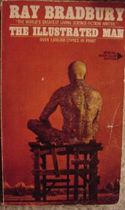 The illustrated man of the title is covered in tattoos that come to life at night and reveal the stories herein. But the illustrated man is just a device to string together a collection of Bradbury’s (mostly) previously published short stories. Most of the stories are set on Mars or other space venues, or are in the future (including two ‘end of the world’ stories.)
 by Margaret Laurence (Fiction, Canadian)
  by William Marshall (Fiction, Police)
 by Steven Sherrill (Fiction)


 by Sam Savage (Fiction)
 an alcoholic and eventually deserts the family. Driven by hunger, Firmin makes a diet of Zane Grey, Lady Chatterley’s Lover, and Jane Eyre. Strangely, as Firmin eats, he takes in the words (and meanings), becoming an extremely literate rat.
 by Trevor Cole (Fiction, Canadian)
  by Lawrence Scanlan (Non-fiction, Memoir, Country Living, Canadian)
  by Gail Anderson-Dergatz (Fiction, Canadian)
  by John Boyne (Fiction, WWI)
  package of letters to the sister of Will Bancroft, the man he fought alongside during the Great War. But the letters are not the real reason for Tristan’s visit. He can no longer keep a secret and has finally found the courage to unburden himself of it.”
 by Rumer Godden (Children’s Chapter book)
 by Spencer Quinn
  by Jacqueline Winspear
 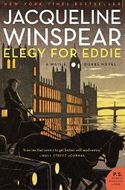 than Agatha Christie’ (USA Today) I’ve followed this series since Maisie debuted as a newly discharged WWI nurse in 1919, through Maisie’s growth during the 1920s. I particularly appreciate that Maisie’s life – her circumstances, her friendships, her personality with both strengths and flaws—has not remained static but has developed naturally as it might have in her time and place.
 by Jacqueline Winspear
  by Agatha Christie
  by Ellery Queen (Barnaby Ross)
  by Agatha Christie
 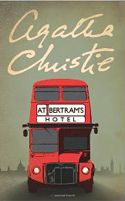 It’s 1965 and Bertram’s hasn’t changed since King Edward V’s time. And that, dear reader, is part of the mystery. Although the hotel seems charming at first, it takes on a sinister face. There’s a great cast of vintage Christie characters, but Jane Marple plays only a peripheral part in the whole investigation.
 by Ellery Queen
  by Phoebe Atwood Taylor
  by Agatha Christie


 by Will Ferguson
 by Julian Barnes
 by Charlotte Bronte
 by Margot Livesay
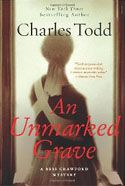 by Charles Todd
  by Cher Fischer


 by Annie Leonard
 by W. Bruce Cameron
 by Fred Stenson (Canadian author)
 by Lila Philips (Nova Scotian author)
 aka The Sittaford Mystery by Agatha Christie
 by Margery Allingham
 This is the first in Allingham’s long-running Albert Campion series, although in this book Campion has only a bit part, I wasn’t impressed by the mystery, and was distracted by all the implausible secret rooms and passageways. In addition, I thought the writing was ‘loose’. Since this was Allingham’s first published effort, I’ll make allowances and I won’t say that I’ll never read another of hers. I’m just not in a hurry to do so.
  by Mickey Spillane


 1.
1.  by Wayne Johnston
  by Phyllida Law
  by Wilkie Collins
 , edited by Ama Ata Aidoo
  by Andrea Kayne Kaufman
  by Wilkie Collins
 by Jay Asher
  by Ian Fox


 1.
1.  by Jane Harris
  by Vikram Seth
  by Grace McCleen
 by Robert G. Hewitt
  , evidently several readers took him to task because he had not elaborated on the grandmother with whom he had spent so many childhood hours.
 by Jacqueline Winspear
  But there were just a couple too many coincidences that advanced the solving of the mystery to suit me: Maisie’s friend just happened to try to match-make her at dinner with a man who just happened to know a guy who made films of the troops in WWI and who just happened to have filmed a cartography unit (and all this just happened to have come up in dinner conversation 14 years after the end of said war). The cartography unit caught on film just happened to be the one Maisie was looking for, and the villain just happened to be visiting the unit that day and was captured on celluloid trying to stop the film crew.
 by Ruth Bishop Juline


 I was busy this month with special volunteer work and so my reading list is relatively short. I did manage to read two full e-books on my Kindle, meaning I spent a little more time on the treadmill – and that’s a good thing!
 by Elizabeth Enright
 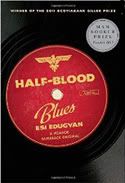 2.
2.  by Esi Edugyan
  by Chad Harbach
  by G.K. Chesterton
  by Elizabeth Speller
 by Inger Ash Wolfe
 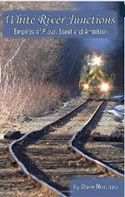 7.
7.  by Dave Norman
  by Henry David Thoreau
  by Marjorie Eccles
  by Steven Kotler


 FREE
FREE

 .99 cents

 by Stephen Leacock
  by William Shakespeare
  by Kate Grenville
 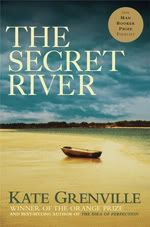 Set in Australia in the early nineteenth century, this is the story of William and Sarah Thornhill, a fictionalized account of the author’s ancestors’ settlement. (4 stars) I’ll be reviewing this in tandem
  by Kate Grenville
  by Victoria Twead
  by Julie Campbell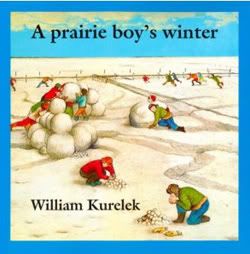
 by William Kurelek
  by Nancy Ross Hugo & Robert Llewellyn
  by Dr. Gary D. McKay


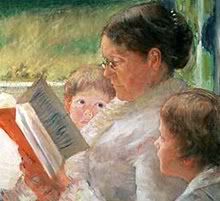 Steven and continued our long-distance reading over the telephone throughout most of of the month of February. But as the month drew to a close, I detected a lack of interest on his part to giving his attention to books or conversation for more than a minute or two. Story time was becoming a chore to him (and to me).
  by Ami McKay
  by Laura Ingalls Wilder
  by Jenny Wingfield
  by Alan Bradley
 by Nick Bantock
  by Nick Bantock
  by Nick Bantock
  by Sally M. Walker
  by John Burnham Schwarz
  by William Shakespeare
  by Harriet Beecher Stowe
 by Lynn Coady
  by Terry Pratchett
  by Paula Marie Coomer


 FREE
FREE
 by Audrey Neffenegger
  by Margaret Dilloway
  which she found herself. Since Shoko was trying so hard to be assimilated, she didn’t share much of her history and culture with her daughter, Sue, who has to take on a reconciliatory mission to Japan for her ailing mother. Although I wasn’t as enthralled by the book as Jen was, and found the redemption issues overly simplified and too easily solved, I did enjoy exploring the mother-daughter relationship, and considering how attempts to ‘fit in’ affect immigrants.
  by Robert Hellenga
  by Gillian Royes
  The protagonist, Shadrack Myers, tends bar at a failing former hotel in Jamaica run by aging American ex-pat Eric Keller. This story revolves around a mysterious woman who comes to inhabit the island just off-shore, that is owned by Eric. There’s some shady island politics thrown in, but Jamaica didn’t come to life for me the way Botswana did in Smith’s novels. The whole book seemed to me lack cohesiveness (not to mention a plot). My overall reaction: ‘huh?”
  by Mary Horlock
 by Helen Garner
 by Seth Steinzor
 by Ann Patchett
 by Patricia Wentworth
 by Dante Alighieri
 7.
7.  by Kate Morton
 by S.S. Van Dine


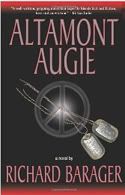
 by Richard Barager
 by Christine Bjork
 by Agatha Christie
 by Rabih Alameddine
 by Steve Hamilton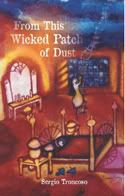
 by Sergio Troncoso
 by Haley Tanner
 by Phoebe Atwood Taylor
 by A.D. Scott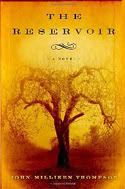
 by John Milliken Thompson
 by Charles Todd
 by Esmahan Aykol


 by Joyce Dennys
 by R. K. Narayan
 by Randy Leffingwell
 by Susan Wilson
 by Téa Obreht
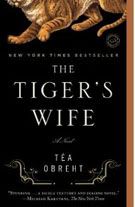 Oddly enough he died in a village close by the orphanage and she retrieves his belongings, while unraveling the story of his childhood. It was then that a tiger escaped from a zoo during World War II bombings and wandered deep into the woods, settling just outside his peasant village. It terrorized the town, the devil incarnate to everyone, except for her grandfather and ‘the tiger’s wife’. Lots of imagery, fables, almost magical realism.
 by Alan Bradley
 by Dave Norman
 by Elizabeth Hay
 by Irene Fleming
 by Chetan Bhagat


 (Frank Lloyd Wright & Rose Pauson)
  (Rohinton Mistry)
 (Nicola Upson)
  (Charles Todd)
 (Josephine Tey)
  (Margaret Laurence)
  (Summer Wood)
  (Lee Kravitz)
  (Kate Morton)
 (Judith Cutler)
 (Agatha Christie)
 (Erich Maria Remarque)
 by Edward Dolnick
 by Susan Maushart
 by Elizabeth Hay
 4.
4.  by Ann Napolitano
 by Winifred Watson
 by Paul Gallico
 by Marshall Saunders
 .
. by Lesley Horton
 9.
9.  by Regina D. Jemison
 by Carson McCullers
 by Jeff Kay
 by Vicki Delaney
 by Carson McCullers
 FREE
FREE


 by W. Bruce Cameron
 by Markus Zusak
  by Emma Donoghue
  by Spencer Quinn
  by Carol Shields
  by Rebecca Rasmussen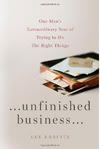
 by E.M. Delafield
  and like books. Wry, clever, and, ultimately, more sophisticated than current versions.
 by Jessica Speart
  by James O. St. Clair & Yvonne C. LeVert
  Historical narratives from Cape Breton Island, Nova Scotia, accompanied by recipes that complete the tales, to give the full flavour of Cape Breton’s rich and varied cultural palate. An interesting foray into the history & culture of the island.
 by May Sarton