SIX DEGREES OF SEPARATION: Year of Wonders to White Fang
This link-up is hosted by Books Are My Favourite and Best, and was inspired by Hungarian writer and poet Frigyes Karinthy. In his 1929 short story, “Chains”, Karinthy coined the phrase ‘six degrees of separation’. The phrase was popularized by a 1990 play written by John Guare, which was later made into a film starring Stockard Channing.
On the first Saturday of every month, Kate chooses a book as a starting point and links that book to six others forming a chain. Bloggers and readers are invited to join in and the beauty of this mini-challenge is that I can decide how and why I make the links in my chain.
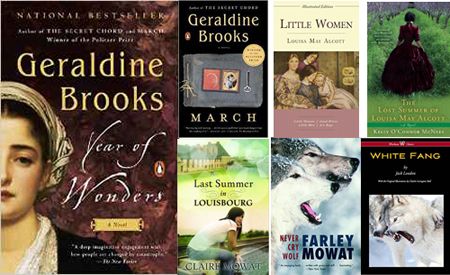
August’s starting book is Year of Wonders by Geraldine Brooks. You no doubt know that this is a story of the plague in the year 1666. When one village receives an infected bolt of cloth from Europe, they decide to isolate themselves from the world in order to prevent the spread of plague to their neighbours. Year of Wonders is perhaps Brooks’ best known book, but the book the won her the Pulitzer Prize for Fiction is
1. March in which she imagines the Civil War experiences of Marmee’s husband, and the March sisters’ (Meg, Jo, Beth & Amy) father. It is a stunning story, and I believe that Brooks based the character loosely on Amos Bronson Alcott, father of real-life author Louisa May who wrote
2. Little Women (Kindle edition free on Amazon). I’m certain this link did not surprise you. This classic story of one year in the lives of the March sisters of New England during the American Civil War justly holds its place of honour in American literary tradition. We likely all know that the character of Jo March was the author’s alter-ego.
3. In The Lost Summer of Louisa May Alcott, the only book in this chain that I have not read, the author Kelly O’Connor McNees, mixes fact and fiction to return to the summer of 1855 when Louisa was twenty-two. The cover promises that it is “a richly imagined, remarkably written story of the woman who created [Little Women]”.
4. From the LOST summer, we move a link to LAst Summer in Louisburg by Claire Mowat. The fortress of Louisburg is on Cape Breton Island in Nova Scotia, Canada. It’s been partially rebuilt and is a National Historic Site which employs scores of young people every summer to act in character throughout the fort. This book is a novel for young teens and centres on fifteen-year-old Andrea Baxter who obtains just such a summer job working in the fort.
Claire Mowat was the wife of Farley Mowat, famed Canadian author, who left a prodigious oeuvre of non-fiction books about Canada, its people, its wildlife, and its geography. He is perhaps best known for The Boat Who Wouldn’t Float and
5. Never Cry Wolf. This book is based on naturalist Mowat’s work for the Canadian government’s Wildlife Service which in the 1950s sent him north to assess the slaughter of caribou by wolves. Mowat is dropped alone onto the frozen tundra, where he begins his mission to live among the howling wolf packs and study their ways.
Never Cry Wolf should be required reading in every secondary school in Canada, and perhaps the US. It was made into a movie starring Charles Martin Smith and Brian Dennehy in 1983.
The cover on this reissue of Never Cry Wolf is a crime and I wonder how people in publishing who have never read a book are allowed to choose a cover. Nonetheless, the cover leads me to my last link:
6. White Fang (free Kindle edition on Amazon), a classic novel by Jack London first published in 1906. It takes place in the Yukon Territories and Northwest Territories of Canada during the 1890s Klondike Gold Rush. White Fang, whose mother was half-wolf, is a fighting dog (hence the cover) who inherits a new owner who domesticates him.
So that’s my chain of six degrees: from a seventeenth century English village to nineteenth century Arctic Canada in six links. What do you think?
Why not visit Kate’s blog and see how she made the final connection to The Muse?

P.S. The links are affiliate links so I will receive a small percentage of any purchase you make after clicking through from this blog.
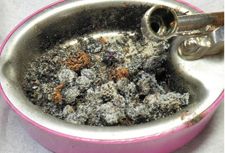 dottle: the plug of tobacco residue or ashes left in the bottom of a pipe after it is smoked.
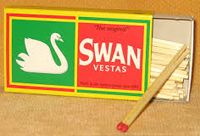 “He filled his pipe and struck one of the wax vestas.”



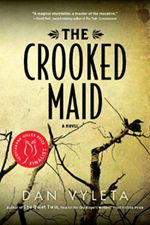 From Amazon: ” Mid-summer, 1948. The war is over, and as the initial phase of de-Nazification winds down, the citizens of Vienna struggle to rebuild their lives amidst the rubble. . . .
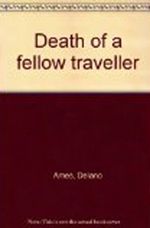 Aka, Nobody Wore Black.

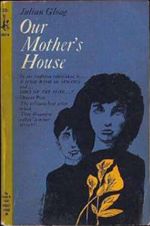 I read this book this month because, well, I was living in my mother’s house after her death.
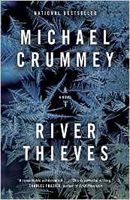 In Newfoundland in the early 1800s, explorer David Buchan wants to establish communication with the last of the Beothuks–the native peoples.
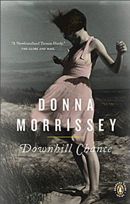 Set in Newfoundland fishing villages c1940-1955, this is a heart-rending story of how war affects families and communities.
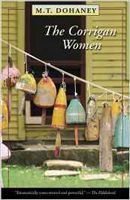 3. The Corrigan Women/To Scatter Stones/A Fit Month for Dying by M.T. Dohaney
 Set in modern day St. John’s, Newfoundland, this book tells its story through alternating chapters about Colleen, a seventeen-year-old would-be eco-terrorist, her mother Beverly, Beverly’s sister Madelaine, and Frank, a benevolent young man without a family.
 Twelve-year-old Jeannie Shaw lives in the Margaree Valley on Cape Breton Island, Nova Scotia in the 1950s. Amazon says: “Lonely and isolated in her small, post-World War II rural community, she longs for a friend, a longing that verges on obsession. When a new family moves in, her hopes are raised, then dashed, and a near tragedy yields unexpected results. Taylor has done a fabulous job of painting a vivid picture of life on Cape Breton Island.”
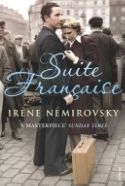 This is the first two parts of what the author evidently intended to be a five part opus. Némirovsky was arrested in 1942 and deported to Auschwitz, where she died. This manuscript, then, was written in the early years of the war in Occupied France, in which she set the novel.
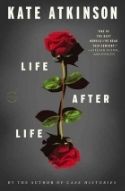 Wow – how to classify this book? By now, you’ve either read the book or heard the premise: Ursula dies at birth, is reborn and this time does not die; Ursula drowns at age 4, we try again and she doesn’t drown; and so on. (So many ways to die!)
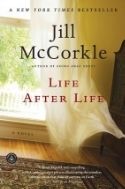 Published in 2013, within two weeks of Atkinson’s book of the same title, McCorkle’s novel seemed to have gotten buried.
 This book showed up in my library inbox in late November because I was trying to complete an unofficial A to Z Reading Challenge using authors’ last names.
 Quire: a set of 24 or 25 sheets of paper of the same size and stock, the twentieth part of a ream.
  I’m joining in an annual link-up hosted by Jo at
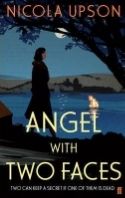

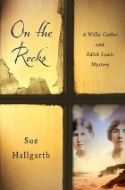 Well, actually, this story is set on Grand Manaan Island which is really Canadian, but the holiday community, at least for the summer discussed, is composed of Americans.
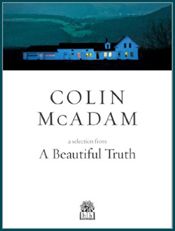 Set in Vermont and in a Florida primate research facility, this story is told alternately from the POV of humans and chimpanzees.
 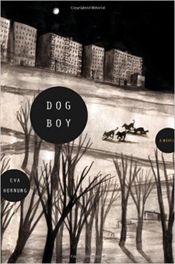 I’ll repeat
 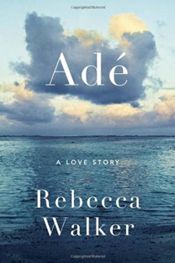 551 GoodReads ratings; my rating – 4½ stars
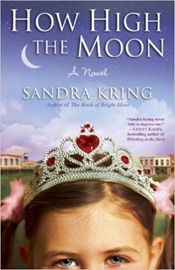 How delightful this book!
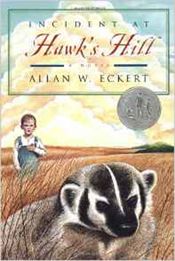 Set in the nineteenth century American mid-west, this is the story of a little boy who becomes lost on the prairie and spends several weeks living underground with an adult female badger. For some reason, I mistakenly thought it was a true story – and I found it highly believable. The boy was small and desperate; and the badger, grieving.
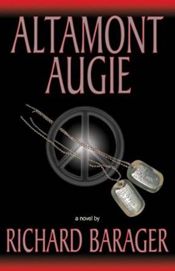 Richard Barager’s debut novel is set against the back drop of 1960s America, the Vietnam War, and the ever increasingly violent anti-war protests of the time. It is the story of David and Jackie, young people on opposite sides of those divisive issues, but who have a passion for each other that connects them through it all.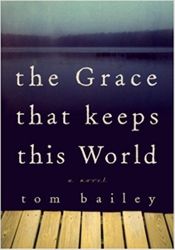
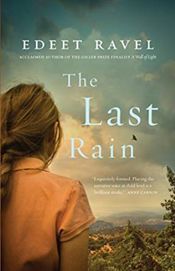 This novel is set on a kibbutz in Israel, mostly in the years 1949 and 1961.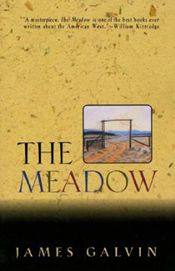
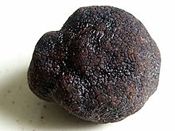 One of my readers asked if anyone knew what truffles taste like. They’re a fungus that usually grows in tree roots, and one wouldn’t think they’d go with dessert. (Mushroom pudding, anyone?)


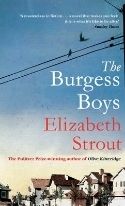
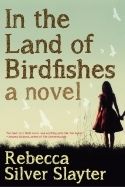 Blinded in childhood, two young sisters are separated for treatment and lose contact with each other. As an adult, Aileen decides to search out her sister in the Yukon Territory, Canada.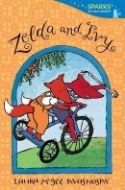
 It’s an interesting aside that Rita Martin was invented in 1938 as a corporate character for Robin Hood flour. According to
 I’ve wanted to read this since Rock Carrier championed it in



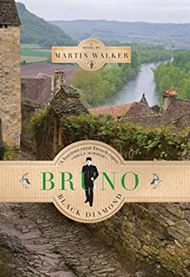 One of my favourite mystery series is Martin Walker’s
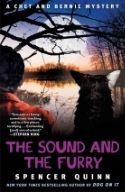 This is the sixth installment in the Chet & Bernie series, which the canine “Chet the Jet” narrates. He and his “partner” Bernie run the Little Detective Agency and have been hired to seek the missing brother of a past “client”. Said brother has disappeared with his houseboat somewhere in the Louisiana bayou. This poses a BIG change of scenery for our boys but Quinn had me smelling those swamps, so succinct were his descriptions.
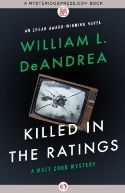 I found reference to this series in Old-Time Detection, a thrice-yearly publication written and published by Arthur Vidro of Claremont NH, and I was able to purchase the Kindle version of the series’ first book.
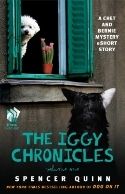 Another sort of prequel to the Chet & Bernie series (see item #1), this is the story of Iggy, the dog next door. Iggy is Chet’s bud, but they don’t see much of each other.