THE HOCKEY SWEATER by Roch Carrier, translated by Sheila Fischman
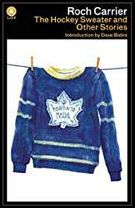 The warm and wonderful book The Hockey Sweater all started with a short story called “Une abominable feuille d’érable sur la glace” (An abominable maple leaf on the ice) that was included in a collection published by House of Anansi Press in the late 1970s. The author, Roch Carrier was inspired to write the story when he was asked by the CBC to talk about Quebec and the difference at the time between French-speaking and English-speaking Canada. He drew on an actual childhood experience of his.
When Roch read the story on the air, a producer from the National Film Board of Canada heard it and had the idea of making a short film of the story. The 10-minute film, brilliantly animated by Sheldon Cohen and lovingly narrated by Carrier, was a success, has won many awards and is much loved by fans (including me).
After the film was released, Sheldon contacted a publisher who, unknown to Sheldon, had wanted to make a book of the story since she had heard it on the radio. The same story that was used in the film is used in the book, but animation and illustration work differently, so Sheldon had to think differently about the art for the book. I think you will agree that his work is brilliant.
The boys in Roch’s village wanted to play hockey like their hero Maurice Richard and, of course, wear the jersey of the Montreal Canadiens hockey team, for which Richard played. When a mistake was made and Roch ends up with a new hockey sweater with the emblem of the rival team, the Toronto Maple Leafs—well . . . that’s a story.
In ten minutes, Roch and Sheldon create the village of Ste. Justine, Quebec in a mid-twentieth century winter. For years, the opening lines “The winters of my childhood were long, long seasons. We lived in three places—the school, the church and the skating rink—but our real life was on the skating rink” were printed (in both French and English, of course) on the back of the Canadian five dollar bill, along with an image of children playing hockey.
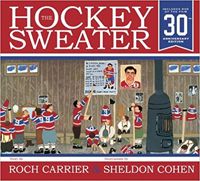 This 30th anniversary edition of The Sweater contains the story and illustrations, and much more. There is a history of the story, bonus illustrations by Sheldon, photos, comments from book tours and from the who’s who of Canadian culture, a short essay by Ken Dryden about the NHL in the 1940s, and many other treats including a DVD of the film.
If you’ve never seen the film, I suggest you watch it if you can find it. If you’re Canadian and you haven’t read the story, you owe it to yourself to get this book—beg, buy, borrow—whatever it takes to get a copy.
This is truly a Canadian classic and one of my favourite books of all time. 5 plus stars

P.S. The links are affiliate links so I will receive a small percentage of any purchase you make after clicking through from this blog.


 It’s impossible to say anything about this book and keep it to a paragraph or two. So I am going to have to write a separate post so that, if you are Canadian, you will know that you must be familiar with this story and treasure this part of your heritage (despite our Prime Minister’s opinion that there is no Canadian identity) and if you are not Canadian, you will understand a little about what makes this country tick.
 This is subtitled a “love story” but this is no romance novel. An American (or was she a Brit? It doesn’t matter really) falls in love with a native Swahili man while in Kenya. When an epidemic breaks out, they attempt to flee to the first world.
 This 2014 winner of the Man Booker Prize is a look into the construction of the Thai-Burma Railway (“The Death Railway”) during World War II by Australians in Japanese POW camps. They worked in horrendous conditions in the Burmese jungle.
 This chapter book for older children and adults, that tells the tale of a homeless border collie (his sheep farm burned) looking for a home, and an orphan, will pull your heart-strings.

 This is a book that I requested from NetGalley because I was intrigued by the cover and title. I had hoped, I think, to peek in many apartments and many lives.

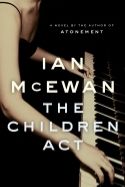 Judge Fiona Maye is dealing with an impending split in her marriage while she is reviewing a difficult case in her court. The case involves a blood transfusion for a seventeen-year-old minor who is one of Jehovah’s Witnesses.
 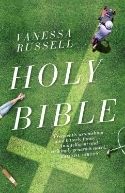 Another portrayal by an outsider to a faith – in this case, I believe it was based on the author’s youth in the Christadelphian ecclesia.
 1.
1.