February10
How do I begin to convey the horror that was the Halifax Explosion of 1917?
The largest man-made explosion up to the atomic bomb. Two thousand dead, more than six thousand wounded & blinded, and a fifth of the city left homeless.
How did I grow up in central Canada without having been taught about this? Why is this tragedy—worse in many respects than the sinking of the Titanic five years earlier—virtually unknown and unremembered outside Atlantic Canada?
Let me start getting you acquainted: In December 1917, World War I had been raging for three years and Halifax, Nova Scotia was well established as the major port city on the North American side of the Atlantic. From Halifax, left troops and supplies that were delivered all over Europe. 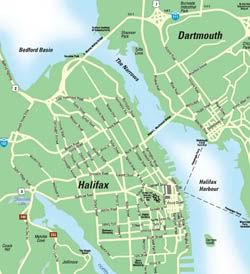 It has a deep & generous harbour, and the added bonus of Bedford Basin, just north of the Harbour, fully protected by land. The Harbour and the Basin are connected by a slender strait known as The Narrows. At its narrowest, the passage is less than 500 yards across.
The French ship Mont-Blanc was loaded in New York City in early December with nearly 3,000 tons of explosives headed for the war in Europe: picric acid, TNT, and gun cotton, as well as barrels of benzene stacked three deep on the decks.
“The weight of the cargo, plus the weight of more than a million pounds of coal needed to power Mont-Blanc’s steam engine, slowed the ship’s speed so much that she would be unable to keep up with a convoy of ships crossing back to Europe from New York. Recognizing that traveling with a convoy with give Mont-Blanc the best protection from German U-boats, harbor authorities advised (Captain) Le Médec to travel up the coast to Halifax, Nova Scotia. Larger convoys, arranged by Canada’s Royal Navy, departed from Halifax’s protected harbor. Perhaps one of them could accommodate the slow-moving Mont-Blanc. If not, the authorities in Halifax could give Le Médec instructions on the safest routes across the Atlantic.”
While travelling through The Narrows in Halifax at 9 am on December 6th, the Mont-Blanc was rammed broadside by a Norwegian ship that was leaving empty from Bedford Basin, and the contents of the Mont-Blanc caught fire and erupted. The resulting explosion created a shock wave that travelled out from the ship at about 5,000 feet per second, a force strong enough to crush the internal organs of any living thing in its path, and a temperature at the core of over 9,000 degrees Fahrenheit. It toppled train cars, cracked hulls of ships, leveled buildings and smashed windows.
“As devastating as the destruction already was, more was yet to come as the outward-spreading shock wave gradually dissipated. During the initial blast, the tremendous pressure of the shock wave so completely pushed air molecules away from the blast site that it created an almost airless condition, like a vacuum, in the area surrounding the explosion site. Unless air is prevented from doing so, it always flows into a vacuum. So, as soon as the outward movement of the air wave slowed, a new gust of air rushed back to fill the partial vacuum around the explosion site. “
Truly, a blizzard of glass.
“Then for ten minutes the gigantic cloud pelted the devastated area with a black rain made thick with benzene residue. The slick liquid coated everything and everyone with greasy soot that penetrated clothing and stained people’s skin black. Along with the rain, debris, including boulders and broken pieces of the Mont-Blanc that had been flung into the air by the explosion plummeted to the ground.”
But that’s not all: the force of the explosion created a tsunami, the crest of which was 40 – 45 feet high that swept homes, factories, businesses and people away.
In a matter of minutes, nearly 2,000 people died, over 6,000 were wounded, and over 9,000 left homeless. Seventy children were orphaned and two hundred more left with only one surviving parent. For some, that parent was a father serving in the trenches of France.
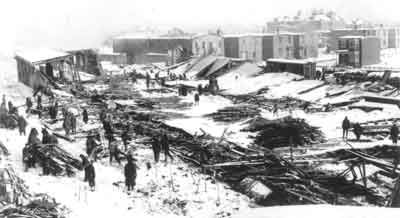
Then: the rescue work began.
[C]ries for help and screams of pain filled the air. Injured people, thousands of them, were everywhere: walking or lying in the streets, crouched outside the wreckage of buildings, trapped aboard ships, buried inside collapsed buildings. (M)any of the survivors who had been outside found that their jackets, coats, and shoes were missing, blown off by the force of the shock wave.
Wounded had to be attended to, the dead laid out for claim by relatives, injured animals had to be humanely destroyed. The following day, a blizzard, this time of snow, hit the city and made it next to impossible for additional relief supplies and personnel to reach the devastated city for 48 hours.
Help to deal with the effects of the explosion, when it could come, originated not only from Atlantic Canada and other Canadian cities, but from the U.S., particularly the state of Massachusetts and the city of Boston. In fact, “every year since 1971, in Boston, Massachusetts, the city lights a freshly cut Christmas tree that towers above Boston Common. Each year’s tree is a gift of thanks from Nova Scotia to the people of Massachusetts, in remembrance of the help they gave to a suffering city.”
 I realize that I haven’t yet commented on the book Blizzard of Glass: The Halifax Explosion of 1917
 but I think the fact that I felt compelled to convey the horror of the story it presents is telling of its quality. It’s written for middle grades, simply and powerfully presenting the tragedy. Several real-life families are followed through the morning and subsequent days. There are many photographs and archival materials. Walker has carefully researched and presents the material in a factual way that allows readers to draw their own conclusions about why the ships collided.
If you’re interested in learning more about the Halifax explosion of 1917, I highly recommend Blizzard of Glass: The Halifax Explosion of 1917
For Canadian readers:
Blizzard of Glass: The Halifax Explosion of 1917
This book is the first I’ve read for The War Through the Generations Reading Challenge. It also qualifies for my 12 in’12 Challenge, What’s In a Name Challenge, Mix-It-Up Reading Challenge, Non-fiction non-memoir Challenge, the New Authors Challenge, and the Dewey Decimal Challenge. I’ve also used it to fill the “B” slot in both the Eh-Zed Challenge and the A-Z Double Whammy, as well as in the Read Your Name Challenge. Whew!

And last, but not least, this is a stop on the Literary Road Trip.



 My birth year, 1954, saw the publication of Horton Hears A Who!
 Geisel’s birthday, March 2, has been adopted as the annual date for National Read Across America Day, an initiative on reading created by the National Education Association. Although I’m not a big celebrator of birthdays, I thought it an appropriate day to feature a book that I knew and loved as a child.
 I got bogged down in the middle of Henry David Thoreau’s
  this month (it’ll be in March’s batch since it’s not yet finished), and trying to catch up with reviews for the books I read in January. Add to that a shortened month, and the result is that my reading list is a little thin for February.
  by Stephen Leacock
 by William Shakespeare
 by Kate Grenville
 Set in Australia in the early nineteenth century, this is the story of William and Sarah Thornhill, a fictionalized account of the author’s ancestors’ settlement. (4 stars) I’ll be reviewing this in tandem
  by Kate Grenville
  by Victoria Twead
  by Julie Campbell
 by William Kurelek
  by Nancy Ross Hugo & Robert Llewellyn
 by Dr. Gary D. McKay


 Steven and continued our long-distance reading over the telephone throughout most of of the month of February. But as the month drew to a close, I detected a lack of interest on his part to giving his attention to books or conversation for more than a minute or two. Story time was becoming a chore to him (and to me).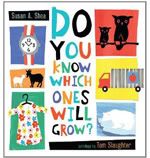
 by Susan A. Shea is simply the most delightful picture book I’ve read so far this year.

 by Bill Martin Jr. and John Archambault, illustrated by Lois Ehlert was originally published in 1989 and has been re-released in a twentieth anniversary edition.
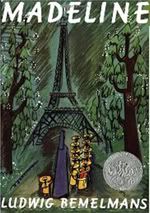
 , written and illustrated by Ludwig Bemelmans, was first published in 1939. The story of the “twelve little girls in two straight lines” proved to be a success, and Bemelmans wrote many sequels to the original during the 1940s and 1950s. The series continues to this day, written by Bemelmans’ grandson.

 won the Mr. Christie Award for Best Canadian Children’s book. With hilarious new illustrations by Sydney Smith and Sheree Fitch’s zany rhymes, this edition will introduce the bestselling book to a whole new generation.”

 , intended for children ages four to seven, is his first picture book. He has modeled Fuddles after his own pet.
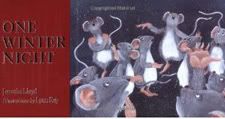
 by Jennifer Lloyd and illustrated by Lynn Ray seemed like a highly appropriate book to read during our long Canadian winter.
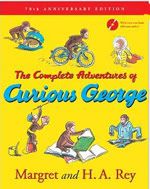
 , first published in English in 1941, was written by Margret Rey and illustrated by her husband Hans (H.A.) Rey. They wrote an additional six Curious George titles published between 1947 and 1966. These are often called the ‘original adventures’, and have been reissued in a

 You might think
 I intended to post one short story each month this year to keep up with the
  is included in the book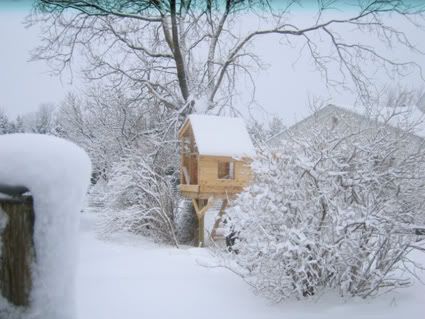
 In the sweet Arkansas summer of 1956, preacher Samuel Lake brings his family to his wife Willadee’s ancestral home for an annual get-together.
  ) friendship with a traumatized eight-year-old neighbor boy and you have the foundation of this story.
 is the battle between good and evil. This appears in the main plot as well as the sub-plots. In the end, good does prevail but not before tragedy strikes, as is often the case in real life.

 WINTER STORM COMING. HUNKER DOWN. READ!
 , a play I likely would not have chosen to read otherwise.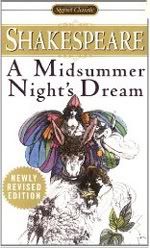
 Here’s my advice on that: give it a pass. Although I enjoyed watching Stanley Tucci as Puck (proving that I can enjoy watching Stanley Tucci in just about anything), the movie left me cold. It was set at the “turn of the nineteenth century” (which I understood to be 1799-1800), but which is evidently the 1890s. The director couldn’t seem to decide if he was dealing with fairies or with satyrs, complete with orgies and naked (albeit in chest-deep water) nymphs; the classy cat-fight degenerated into a mud wrestling match; and somehow all four human lovers shed every stitch of clothing before awakening the next morning and being told by Theseus (act IV, scene i) to stand up (giving that statement a completely different shade of meaning from the original play.) Note: There are

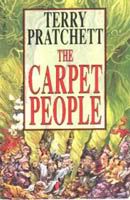 Witness what happens when a blogger ventures outside her usual reading genres and takes on a REAL challenge – and then tries to write an intelligent review of the book involved. That’s my situation with
  by Terry Pratchett.
  I did, however, read Pierre Berton’s
  when I was an adolescent (and again as a young mother along with my daughter) and found it delightful. As I read

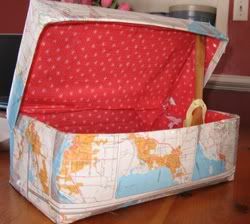 So when I saw this idea in